Warm yourself first: it costs pennies
Which? tested what it costs to keep warm in bed. Warming yourself is far cheaper than warming the air in a room:
| How you keep warm | Cost to run, per hour |
|---|---|
| Hot water bottle | About 1.8p |
| Electric blanket, highest setting | About 2p to 8p |
| Electric heater | About 8p to 76p |
The cheapest electric blankets cost about 2p an hour to run, and the most power-hungry about four times as much. Electric heaters cost about 8p to 76p an hour, so use them sparingly. Check the wattage of anything you plug in with our appliance running cost calculator.
- Layers: several thin layers keep you warmer than one thick layer.
- Eat and drink warm: NHS advice is to have at least 1 hot meal a day, because eating regularly helps keep you warm, and to have hot drinks regularly.
- A warmer duvet: BBC News suggests bringing out a winter-weight duvet of 10.5 tog or higher.
Use hot water bottles and electric blankets safely
- Never use both at once: never use a hot water bottle at the same time as an electric blanket.
- Electric blankets: unplug blankets before you get into bed unless they have a thermostat control for safe all-night use. Don't buy second-hand, and replace your blanket at least every 10 years.
- Hot water bottles: never use boiling water. Let it cool for a few minutes, fill no more than two thirds and squeeze the air out. Always use a cover, and don't use a bottle more than two years old. The daisy wheel on the neck shows the year it was made.
Keep the heat in the room you're in
- Curtains and doors: draw curtains at dusk and keep doors closed to block out draughts. On sunny days, open them to let the sun warm the room.
- Draught-proofing: the Energy Saving Trust says draught proofing around windows, floors and doors could save you around £55 a year. A brush or hinged flap draught excluder stops a gap at the bottom of a door, or you can make one stuffed with used plastic bags or spare material.
- Chimney you don't use: a chimney draught excluder costs around £25. It shouldn't block the chimney completely, so some air still gets through. Many are removable if you also use your fireplace: take it out before you light a fire.
- Don't seal everything: the Energy Saving Trust warns that if your home is already well draught proofed, more draught proofing may increase the risk of poor air quality. Leave extractor fans and vents clear, as damp and mould can harm your health.
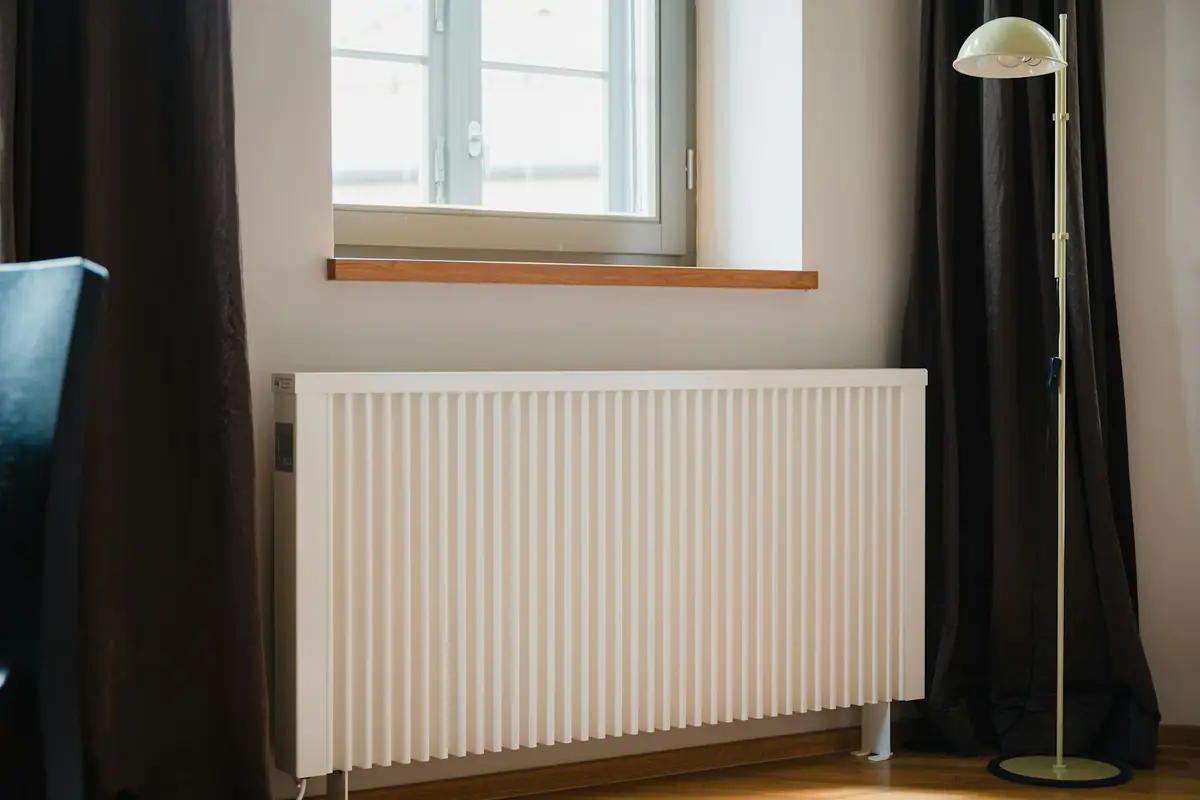
- Radiators: move furniture away from them. Sophie Burr of National Energy Action told BBC News that about 35% of the heat from radiators is lost through walls, which radiator foil behind them can help reflect back.
Use the heating wisely
- Turn the thermostat down by 1°C: the Energy Saving Trust says turning it down from 22°C to 21°C can save you £120 a year in Great Britain.
- Lower your combi boiler's flow temperature: Nesta's evidence suggests households could save about 9% on their gas bill by setting it to 60°C, if it's currently at 80°C. Nesta has a step-by-step guide to doing it yourself, or you can ask the engineer at your next boiler service.
- Cheaper times: if you're on a time-of-use or Economy 7 tariff, see the cheapest time to use electricity.
- Low all day or in bursts? See is it cheaper to leave the heating on low all day.
Don't let your home get too cold
The UK Health Security Agency advises: heat your home, or the rooms you spend more time in, to at least 18°C. This matters most if you're 65 or over, not very mobile or have a health condition such as heart or lung disease. If you're under 65, healthy and active, you can safely have your home cooler than 18°C, as long as you're comfortable. Babies should sleep in rooms heated to between 16°C and 20°C.
Many councils and libraries run free warm spaces in winter. Ask your council what's near you.
If you can't afford to heat your home
- £100 Household Energy Payment for council tax bands A to D in England, from January 2027.
- Warm Home Discount: £150 off your electricity bill if you get certain benefits.
- Winter Fuel Payment and Cold Weather Payments.
- Help if you can't pay your energy bill, including grants and your supplier's duties.
- Priority Services Register: free extra help from your supplier if you're older, disabled or unwell.
Energy deals from our partners
Frequently asked questions
What is the cheapest way to keep warm at home?
Heat yourself rather than the room. Which? puts a hot water bottle at about 1.8p an hour and an electric blanket at about 2p to 8p an hour, against about 8p to 76p an hour for an electric heater.
Is an electric blanket cheaper than putting the heating on?
Per hour, it's one of the cheapest ways to stay warm in bed or on the sofa. It warms you, not the room, so keep the rooms you use at a safe temperature too.
Can I use a hot water bottle and an electric blanket together?
No. GOV.UK fire safety advice and the London Fire Brigade both say never use them at the same time.
What temperature should I keep my home in winter?
The UK Health Security Agency advises heating the rooms you spend more time in to at least 18°C. If you're under 65, healthy and active, NHS advice says you can have your home cooler, as long as you're comfortable.
How often should I replace a hot water bottle?
NHS safety advice says don't use one more than two years old. The year it was made is on the daisy wheel on its neck.
Sources
- Which?: Hot water bottle or electric blanket, which is cheapest
- Which?: Best electric blankets and heated throws
- GOV.UK: Fire safety in the winter
- London Fire Brigade: Electric blankets
- NHS National Services Scotland: How to avoid hot water bottle burns and scalds
- UK Health Security Agency: The surprising ways cold weather can affect your health (13 November 2026)
- Leeds Teaching Hospitals NHS Trust: Keeping warm
- Telford & Wrekin Council: Cold weather and health
- Buckinghamshire Council: Top tips for keeping warm
- Energy Saving Trust: Draught proofing
- Energy Saving Trust: Draught proofing advice
- Energy Saving Trust: Eight quick DIY jobs to save energy
- Energy Saving Trust: How to draught-proof your windows and doors
- Nesta: How to lower your combi boiler flow temperature
- Nesta: Money Saving Boiler Challenge evidence summary
- BBC News: Before you crank up the thermostat, try these tips (24 October 2026)